Best Dog Training Center in Kathmandu Nepal
- Dog Training Ktm, Nepal
- Rambo Abbie Dog Training Center
- Canine Companions Pvt. Ltd.
- Abhilasha – DogTrainer and Behaviourist
Putting Together A Nutritious Diet For Your Dog
There are a great number of distinct families of dogs, in addition to the numerous breeds of canines. Figuring out what breed of dog to purchase and how to properly care for it is a significant life choice. This article will instruct you on how to care for him once you get him home.
When traveling with your pet, you should never scrimp on the packing preparations. Although it goes without saying that you need to carry enough of his food, drink, and any medications he might be taking, experts recommend that you also bring his grooming tools, vaccination tags, paperwork, and an additional leash with you. You should also bring a flat sheet with you in case your dog jumps up on any of the hotel furnishings.
Under no circumstances should you ever transport your dog in an unrestrained vehicle. Both putting him in danger by sitting on your lap or putting him in the front seat impairs your ability to drive safely. Always secure him in a pet carrier that is suitable for his size, and consider purchasing a pet seat belt that will allow him to ride comfortably and securely in the middle of the back seat.
Ensure that you are well-informed on the flea treatments that are being administered to your dog. Children may be exposed to a higher risk of developing cancer if they use products that contain substances that are one thousand times more powerful than the level the EPA considers to be safe for human consumption. You should talk to your veterinarian about alternate therapies that are safer for families, and you should be sure to keep young children away from the treatments.
Keep your dog in good shape. Because he is susceptible to the same health problems that are associated with obesity as you are, you should make sure that he engages in a lot of physically active play and maintains a diet that is nutritionally sound. Keep in mind that walking will benefit you as well, so in order for the both of you to be happier and healthier, incorporate walking into your daily routine.
Advertisement
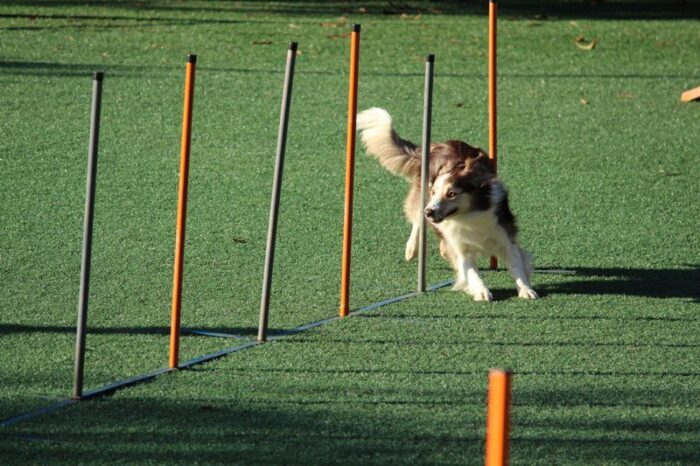
If training with your dog has become repetitive and monotonous, you might want to think about incorporating some agility drills into the mix. These will teach your dog to be demanding and heed orders, but they are typically a lot more enjoyable for the dog to learn than the standard ones. Creating an obstacle course for the dog and regularly putting him or her through it can be a fun activity for the whole family.
Provide a comfortable sleeping area for your dog. Every dog requires a warm and cozy bed that is all his or her own, with the ability to regulate the temperature. In the event that this does not occur, the dog may choose to sleep in various unsuitable spots, such as on your sofa when you are not looking. A bed provides him with not only a sense of security but also a sense of belonging.
Advertisement
Training your dog using only positive reinforcement is the most effective method. When your dog exhibits a positive behavior, you should show your appreciation for it by praising it in some way, such as by giving it a reward or patting it. Talk to your dog in a low voice and be careful to give it praise each time it demonstrates a good behavior.
Recognize that your dog is going through the natural process of aging and educate yourself on how to best suit his evolving requirements. It’s possible that your senior dog needs some dietary adjustments, more rest, and won’t be as playful as he used to be. This doesn’t mean that he should be shoved into a corner to waste away in old age. Make his senior years as enjoyable as possible by catering to his preferences.
Advertisement
When creating your will, make sure your pet dog is not left out of consideration. Because their owners did not leave precise instructions about the maintenance of their dogs, many people end up fighting over them or outright neglecting them. Include a section in the will that tells your loved ones exactly how to take care of your dog and ensures that he gets the best possible treatment from them.
Make it a priority to provide your dog plenty of opportunity to interact with other dogs and people. Take him on walks in public places like the park or the beach, where he may interact with both humans and other dogs. Praise him in front of others and encourage him to maintain positive social interactions. He’ll feel lot more at ease in any environment, and his overall mood will improve as a result.
Advertisement
It is not unheard of for a dog to have cuts from stepping on sharp items, as this happens rather frequently. When you discover a cut on your dog’s paw, you should first clean the wound with an antibiotic and then bandage it. If the wound is severe, you should seek medical attention at a veterinary clinic.
Apply some sunscreen to your dog before you take him out for a day of fun in the sun to ensure that he stays healthy and happy. Include your dog in your routine of sun protection because dogs are susceptible to suffering from severe burns on their noses and the inner surfaces of their ears. Just be sure that the product you’re using does not include any zinc or PABA.
Advertisement
If you are trying to teach your dog some fundamental commands, one of the first things you should teach him is how to come when called. Everyone has the expectation that their dog will come back when they call it. If your dog has a reliable recall, you won’t have to stress about finding it if it escapes the house and runs off. Your dog will come back to you immediately. When you use your recall term, you should be able to remember what it was.
If you are considering getting a dog, it is essential that you make an informed decision on the breed you want. For instance, if you have young children, getting a huge, aggressive dog might not be the best decision. Alternately, if you have limited space, a dog of a smaller breed would be more suitable. Pick a pet that will perform well with the way you lead your life.
If you want to take good care of your dog, you have to study how dogs think in order to understand their mental processes. Does your pet seem distressed? Think about the things you would desire if you were a dog and write them down. Is your pet having difficulties sleeping? Think about where you would want to sleep if you’d been born with a tail instead of a normal tail. Keeping the requirements of your pet top of mind might make it simple to find a solution to any issue.
In the same way that you would show affection to a child, show it to your dog. Dogs were designed to live in packs, and when they are allowed to do so, they frequently show affection for one another during the course of the day. Petting and cuddling with your dog are great ways to demonstrate affection for him and provide him with everything he requires. The connection that the two of you will share over the years will undoubtedly become even stronger as a result of this.
Do you believe that you have a better understanding of how to properly care for your dog now? Your concerns regarding your dog will be eliminated if you follow this piece of advice. Keep this article on hand for the next time you might require it.
Figuring Out Which Dog Training Method Is Best For You And Your Pet
Training your dog needs an initial investment of work on both your side and the part of your dog. Be sure that you have a clear understanding of the situation before you jump in. The best way to ensure that you are equipped with sufficient information to know what to do is to learn as much as you possibly can about dog training. You can broaden your knowledge of how to train your dog by reading the material that follows.
It is not an effective method of training to swat or hit your dog in any way. If you try to train your dog in this way, all you will teach them is to be afraid of you, which is exactly what you want to avoid. Eventually, the dog will ignore your vocal commands and will only respond when you raise your hand in front of him. It is a bad idea for an owner to try to win the allegiance of their dog through the use of terror.
Advertisement
When you enter a room in which your dog is present, you should take care to ensure that he maintains his composure. When you walk into the house or into the room that they are in, you need to make sure that they are not upset in any way. They will not be as anxious if they believe you are not going to recognize them immediately soon.
The use of reinforcement is essential to the process of training a dog. However, reinforcement is only effective when it is carried out at the appropriate moment and time. When it comes to the dog’s future performance in relation to the intended act, enthusiastically shouting “Good girl!” just a few seconds too late has little positive impact on the dog’s overall performance. Immediate reinforcement of the desired behavior ought to be provided.
Dogs rapidly figure out whether or not you actually want them to comply to your directions each and every time, or whether they occasionally get the opportunity to disobey you without incurring any negative consequences. Don’t send bogus communications! You should never issue an order to your dog unless you are prepared to carry it out and make certain that your dog obeys that command.
It is imperative that you stick to a routine in order to successfully housebreak your new puppy. Bring your new puppy outdoors to relieve himself as soon as you get up in the morning, as soon as you put him to bed at night, and every couple of hours in between. This will assist him in understanding that urination and defecation take place outside. In addition to this, it prevents urine odors, which are appealing to your dog, from ever entering the house in the first place.
One helpful piece of advice for training your dog is to start when the dog is still a young puppy. Younger canines have a greater capacity for learning and are more receptive to instruction than their older counterparts. Older dogs have a reputation for being difficult to train because they have accumulated more life experience and have developed routines that they have followed for a longer period of time.
When you take your dog outside to train him, try to keep the leash as loose as possible. When out on a stroll, dogs have a tendency to spread their noses far and wide, and a leash that is overly tight can cause them discomfort. This causes them to become aroused, which in turn makes them desire to yank on the leash. By leaving a bit of slack while they walk, informed owners can avoid engaging in this behavior.
Do not attempt to correct your dog by calling it over to you. Do not reprimand the dog for arriving when he is called, even though you may still be irritated at him for the problem he just caused. When you call your dog, he should know that it is “safe” to come to you at any time, and he should have the impression that you are happy to see him.
Dogs that suffer from separation anxiety benefit greatly from crate training. Dogs that are prone to anxiety benefit greatly from having access to crates. During the process of learning to use a crate, it can be good for the dog to have blankets or dirty laundry that smell like their favorite persons. Dogs who suffer from anxiety are more likely to act destructively when their owners are not there. Anxious dogs are safer when they are contained in a crate.
Be consistent. Establish a routine for your new pet. In addition to feeding and walking him at the same time each day, you should also take him out to the restroom on a regular basis. Consistency is essential for the health and well-being of dogs, and it also makes it much simpler to train them. Always keep in mind to give him praise when he behaves appropriately and to point out and rectify any errors that he may make.
Never give your pet any kind of punishment for coming when called. Not only is it important for your dog’s obedience, but it’s also important for your dog’s safety to have a solid recall command. It might appear to be common sense that it is not a good idea to call your pet to you in order to discipline it, but when you are upset with a dog who has escaped the yard or who is refusing to come to the bathroom, it is easy to forget this. You can rest assured that the next time they get away from you, they will consistently return when called if you correlate their “come” order with happy events and continue to link it to those experiences even after they have returned home.
Be respectful whenever you go out with your dog in public. When walking alongside other dogs on the sidewalk, you should take precautions to ensure that your dog will not approach the other dog unless both sets of owners give their permission. Because you can never be sure of the temperament of a dog you haven’t met before, this is an excellent strategy for preventing unexpected fights between canines.
When housetraining a dog, it is very vital for the dog to understand that when he relieves himself outdoors, you are pleased with him and proud of him. As soon as he has finished what he was supposed to perform, give him a treat and some attention. Do not only ignore him as he goes about his work while you focus on your own responsibilities.
If you feel that your dog has earned a reward for something that he has done, you should give it to him as soon as possible following the behavior in question. If he has done something that warrants disciplinary action, you should not wait to take such action with him. Your dog will have a better understanding of whether or not what he did was something that he should have done if you react as soon as he accomplishes something, whether that reaction is positive or negative.
Always start training your dog’s recall in an area that is secure and confined for the best results. The ideal place to begin is in a backyard enclosure, such as one that is fenced in, or another outdoor enclosure. You will be able to keep your dog secure as you practice the recall command until the dog is completely trustworthy, while at the same time providing him with opportunities to be challenged by external distractions.
Training using “time out” is effective not only with children but also with dogs and puppies. Try giving your dog a “time out” in a crate or other quiet room if he engages in unacceptable behavior such as jumping on people, biting other animals, or racing wildly around the home. This will help the dog to relax, and it will also serve as a reminder to refrain from engaging in that behavior in the future.
Putting in the time and effort to train your dog the right manner will pay you in the long run. Be aware of what you are getting yourself into, and prepare yourself with information and pointers. You should be able to find your way forward with the assistance of the advice provided in the article that was just read. After you’ve finished reading this article, be sure to go back and obtain some additional information about how to train your dog.
Advertisement